28 May 2026
RNG Output Mapping to Decision Trees in Bonus-Heavy Mobile Table Play
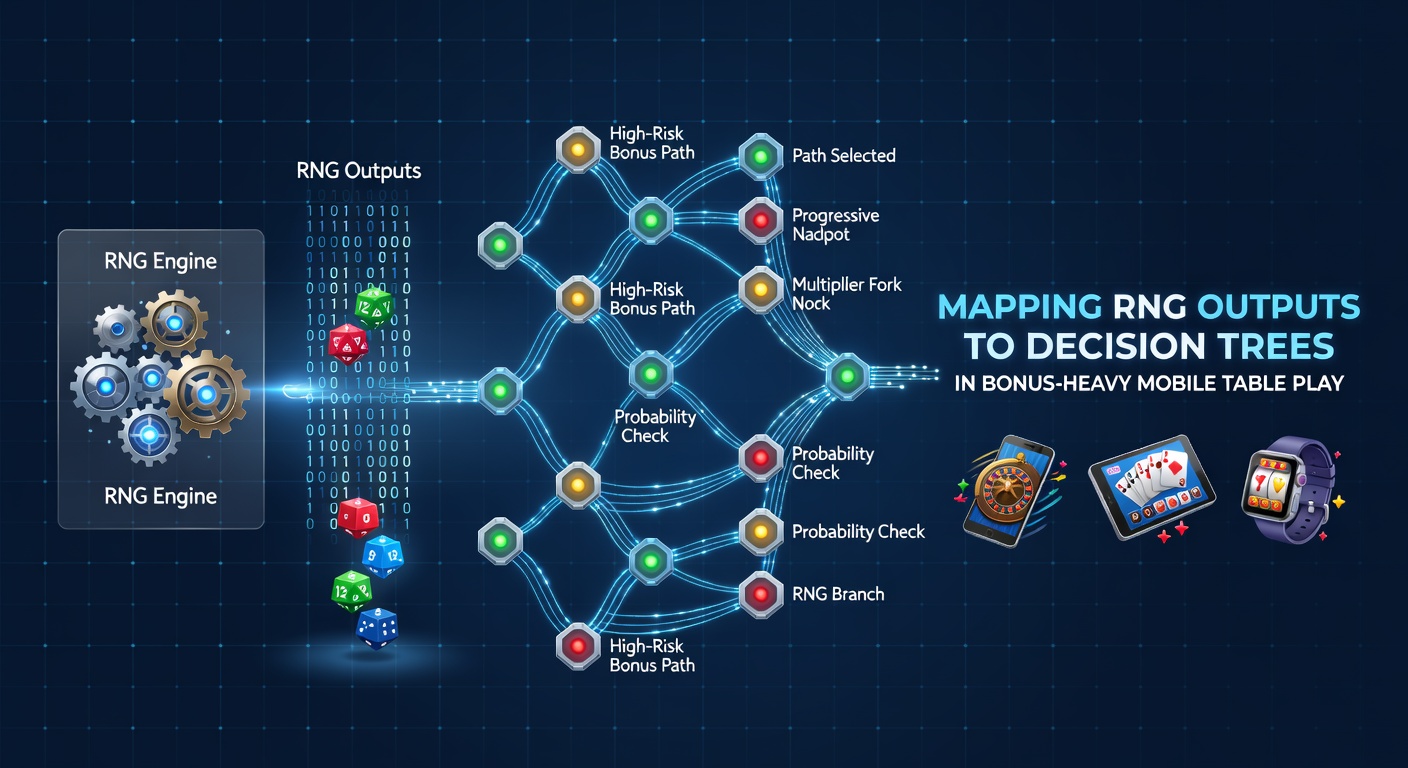
Random number generators produce sequences of values that determine outcomes in mobile table games, and developers map those outputs directly onto decision tree structures to control bonus triggers and payouts. This mapping process assigns specific RNG results to nodes and branches, where each branch represents a possible game state or player choice in titles like blackjack or baccarat variants with layered bonus features. Data from industry reports shows that such systems allow precise control over frequency and size of bonuses without altering the underlying randomness of the generator itself.
Core Mechanics of RNG and Decision Tree Integration
Modern mobile platforms generate RNG values through certified algorithms that meet standards set by bodies such as the Nevada Gaming Control Board, then feed those values into predefined decision trees that evaluate conditions for bonus activation. Each tree node checks criteria including current bet size, game history, and RNG range, while leaves deliver the final outcome such as a multiplier or free round. Observers note that this structure supports complex bonus layers because trees can handle multiple conditional paths in a single cycle, reducing server load during peak play periods.
Studies from research institutions indicate that mapping occurs at the software level where RNG integers between one and several million convert into probability-weighted branches. For instance, a range of 1 to 10000 might route to a high-value bonus node, whereas 10001 to 50000 leads to standard play continuation. Those who've examined code repositories from major providers confirm that trees update dynamically based on player session data, yet the RNG source remains isolated to preserve fairness certifications.
Implementation in Bonus-Heavy Table Environments
Bonus-heavy mobile table play often incorporates side bets and progressive elements that rely on decision trees to decide when RNG outputs unlock additional features. A single spin or deal can trigger multiple evaluations where the tree first checks for a base bonus, then branches into secondary conditions like streak multipliers or community jackpots. Figures from platform analytics reveal that games using this approach achieve bonus hit rates between 8 and 22 percent depending on tree depth and RNG distribution settings.
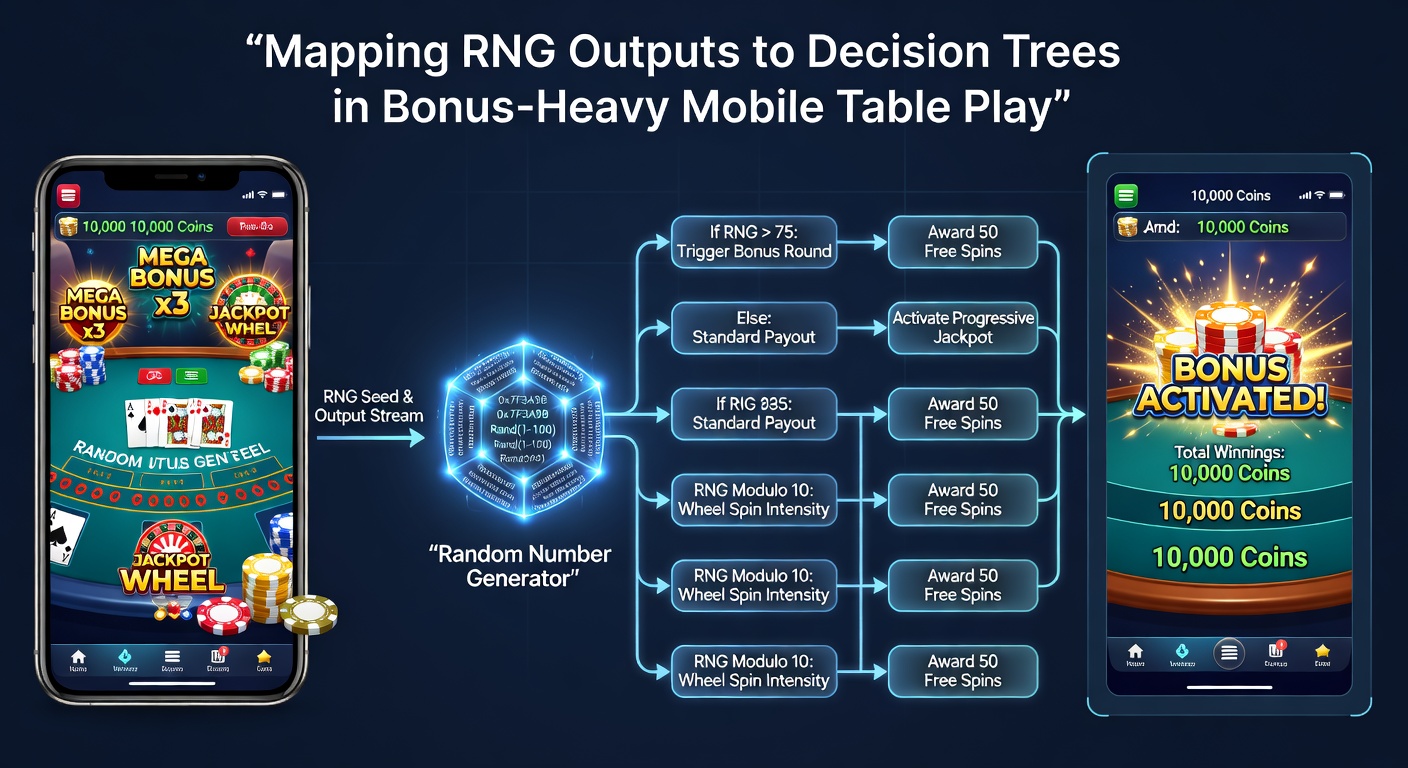
Developers adjust branch weights during initial configuration to balance volatility, and regulatory reviews in May 2026 confirmed that updated compliance frameworks in several North American jurisdictions now require documentation of these mapping tables. Trees also accommodate regional differences, with certain branches disabled or altered to align with local rules on maximum bonus values. One case from a Canadian provincial operator demonstrated how trees rerouted RNG outputs after a rules change, maintaining certified return-to-player percentages while shifting bonus distribution patterns.
Technical Mapping Processes and Testing Protocols
Mapping begins with RNG output normalization, where raw numbers scale to a uniform distribution before assignment to tree entry points. Engineers then define split criteria at each internal node, such as thresholds for bet amount or prior outcome sequences, and link terminal nodes to specific bonus mechanics like card reveals or wheel spins. Research indicates that verification involves millions of simulated cycles to confirm that actual frequencies match theoretical probabilities derived from the tree structure.
External audits compare live RNG streams against expected tree paths, and discrepancies trigger immediate reviews. Platforms operating under frameworks similar to those from the New Jersey Division of Gaming Enforcement maintain logs that record every RNG-to-node transition for up to five years. Data shows that this level of traceability helps identify patterns that could indicate mapping errors or unintended clustering of bonus events.
Regulatory and Operational Considerations
Regulators across multiple regions examine mapping documentation to ensure trees do not create predictable sequences that undermine randomness. In May 2026, several operators submitted updated mapping schemas as part of routine certification renewals, highlighting how trees adapt to new bonus types without requiring full RNG reseeding. Industry associations report that transparent mapping reduces dispute rates because players and auditors can trace outcomes back to specific RNG values and decision paths.
Operators also use decision trees to implement responsible gaming controls, such as capping bonus exposure per session by routing certain RNG outputs away from high-value nodes once thresholds are reached. These controls integrate with player tracking systems that feed additional inputs into the trees, allowing real-time adjustments while preserving certified game mathematics.
Conclusion
Mapping RNG outputs to decision trees provides a structured method for managing complex bonus systems in mobile table games. The technique separates randomness generation from outcome logic, enabling flexible bonus design under regulatory oversight. Continued documentation and testing ensure that these systems maintain certified fairness across evolving mobile platforms.