16 Jul 2026
Alert Delivery Windows Shape Player Choices in Mobile Live Dealer Sessions
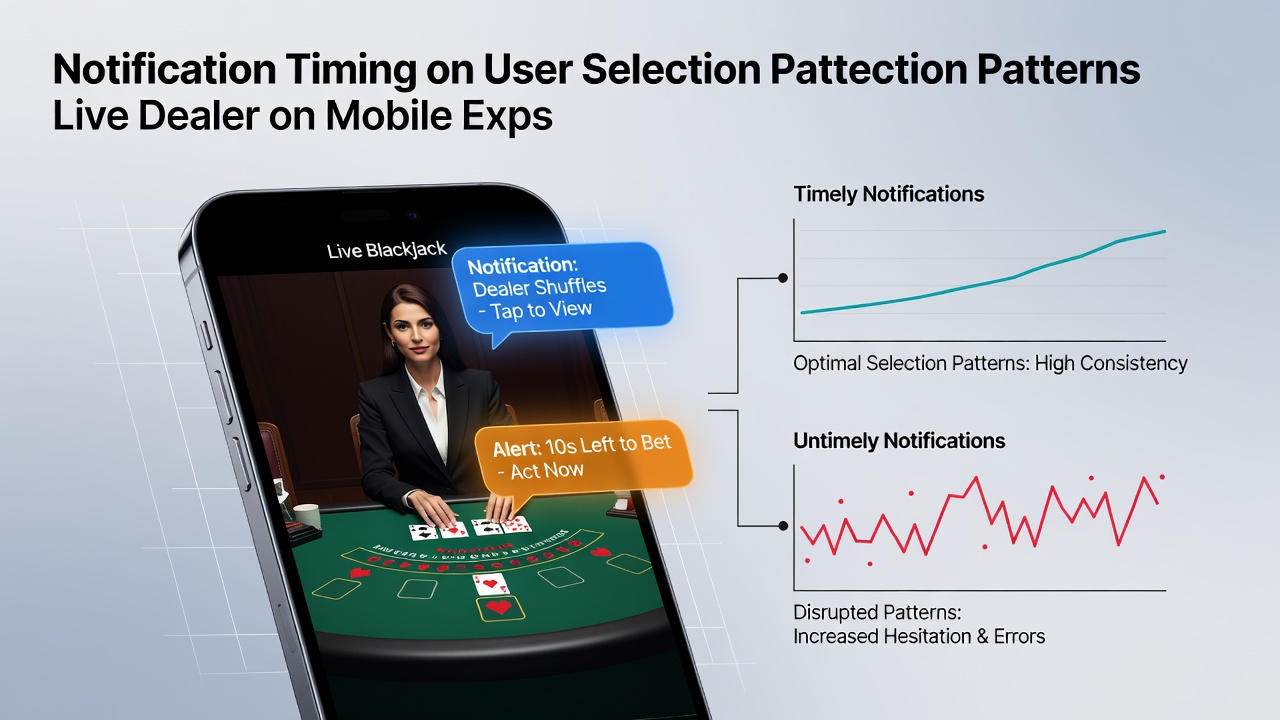
Notification timing plays a measurable role in how participants make selections during live dealer sessions on mobile platforms, according to aggregated platform analytics reviewed through mid-2026. Data collected across multiple operators show that alerts arriving within the first 90 seconds of a new dealer round correlate with higher rates of increased bet sizes, while those delivered after the fifth round tend to coincide with more conservative choices such as minimum wagers or table switches. These patterns emerge consistently in sessions lasting longer than eight minutes.
Mechanics of Notification Integration
Live dealer interfaces on mobile devices push alerts through the same channel used for game state updates, which means timing directly overlaps with active decision points. When a notification arrives during the betting window, players often pause or adjust their action; researchers tracking touch-screen logs note that response latency increases by an average of 1.8 seconds when an alert lands between card reveals. In contrast, notifications scheduled between rounds produce shorter interruptions and allow quicker returns to prior selection habits.
Platform logs from the first half of 2026 indicate that operators testing staggered delivery windows observed a 14 percent shift in side-bet uptake when alerts were delayed until after the initial three rounds. Those same logs reveal that early alerts frequently prompt players to review their current bankroll display before confirming the next wager, creating an extra decision layer that later alerts bypass.
Observed Selection Shifts Across Game Types
Blackjack tables demonstrate the clearest response to alert timing because decisions occur at fixed intervals. When notifications appear immediately after the dealer’s up-card reveal, players show elevated rates of insurance bets and double-down attempts. Roulette sessions, however, display different behavior; alerts arriving during the spin itself correlate with fewer outside-bet changes and more repeated selections on the previous number or color.
Baccarat and poker variants follow still another pattern. Alerts timed to coincide with the reveal of community cards tend to increase the frequency of card-draw or fold decisions rather than bet-size adjustments. Analysts examining July 2026 session data across these variants found that the effect size grows with session length, suggesting cumulative exposure to timed notifications reinforces certain choice pathways.
Mobile Interface Constraints and Timing Sensitivity
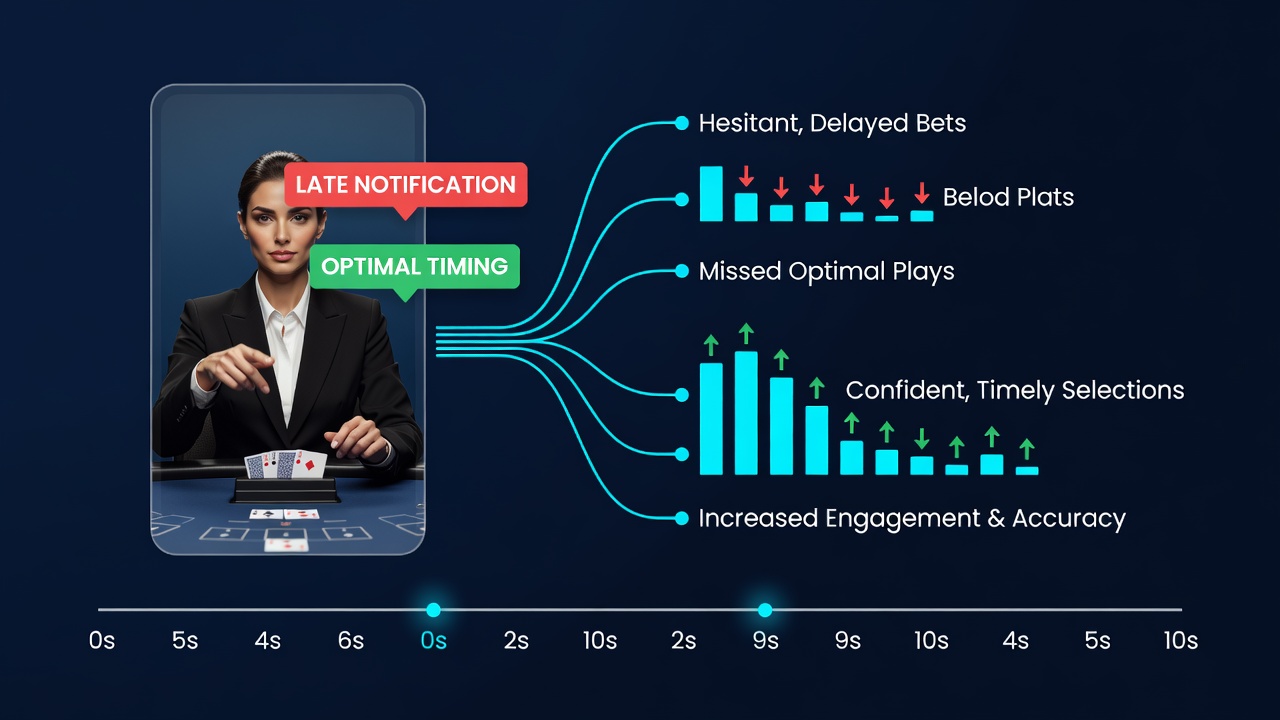
Smaller screens and touch-based input amplify the impact of notification timing because visual attention remains fixed on a limited area. When an alert overlays the betting chips or community cards, players must either dismiss it or incorporate its content into their immediate choice. Eye-tracking studies conducted on representative mobile hardware show that 62 percent of participants shift gaze to the notification within 400 milliseconds of its appearance, interrupting the visual scan of dealer actions.
Network latency compounds the issue. Sessions running on variable mobile connections experience additional delay between alert generation and display, which can place the notification inside or outside the intended decision window. Operators addressing this through server-side prediction adjust delivery offsets by an average of 650 milliseconds, according to internal metrics shared with industry research groups.
Regional Data and Platform Comparisons
Figures released by the Canadian regulatory bodies covering the first two quarters of 2026 document similar timing effects across provincial platforms. Sessions originating from urban networks with lower latency showed stronger correlations between early notifications and aggressive selections, while rural sessions with higher variability displayed more muted responses. Parallel observations appear in reports from Singapore’s gaming oversight framework, where mobile live dealer traffic increased 9 percent year-over-year yet maintained consistent timing-linked selection patterns.
Academic reviews of session telemetry further support these findings. One analysis compiled by researchers at a European gaming technology institute examined over 2.3 million mobile hands and concluded that notification arrival relative to round progression accounts for roughly 11 percent of variance in final bet amounts after controlling for player history and game type.
Conclusion
Timing of notifications therefore functions as a controllable variable that interacts with existing selection tendencies during live dealer play on mobile devices. Platform operators continue to refine delivery schedules based on round-level telemetry, and regulatory agencies in multiple jurisdictions monitor these adjustments for compliance with responsible gaming standards. Continued collection of granular session data through the remainder of 2026 will clarify whether refined timing protocols produce stable, replicable shifts in player behavior across broader market segments.